
OSHA’s Top 10 Violations of 2026: The Same Hazards, a Clear Message for Employers
OSHA’s Top 10 Violations for FY 2026 reveal the workplace hazards most often cited by inspectors and highlight key opportunities for employers to improve safety, compliance, and injury prevention.
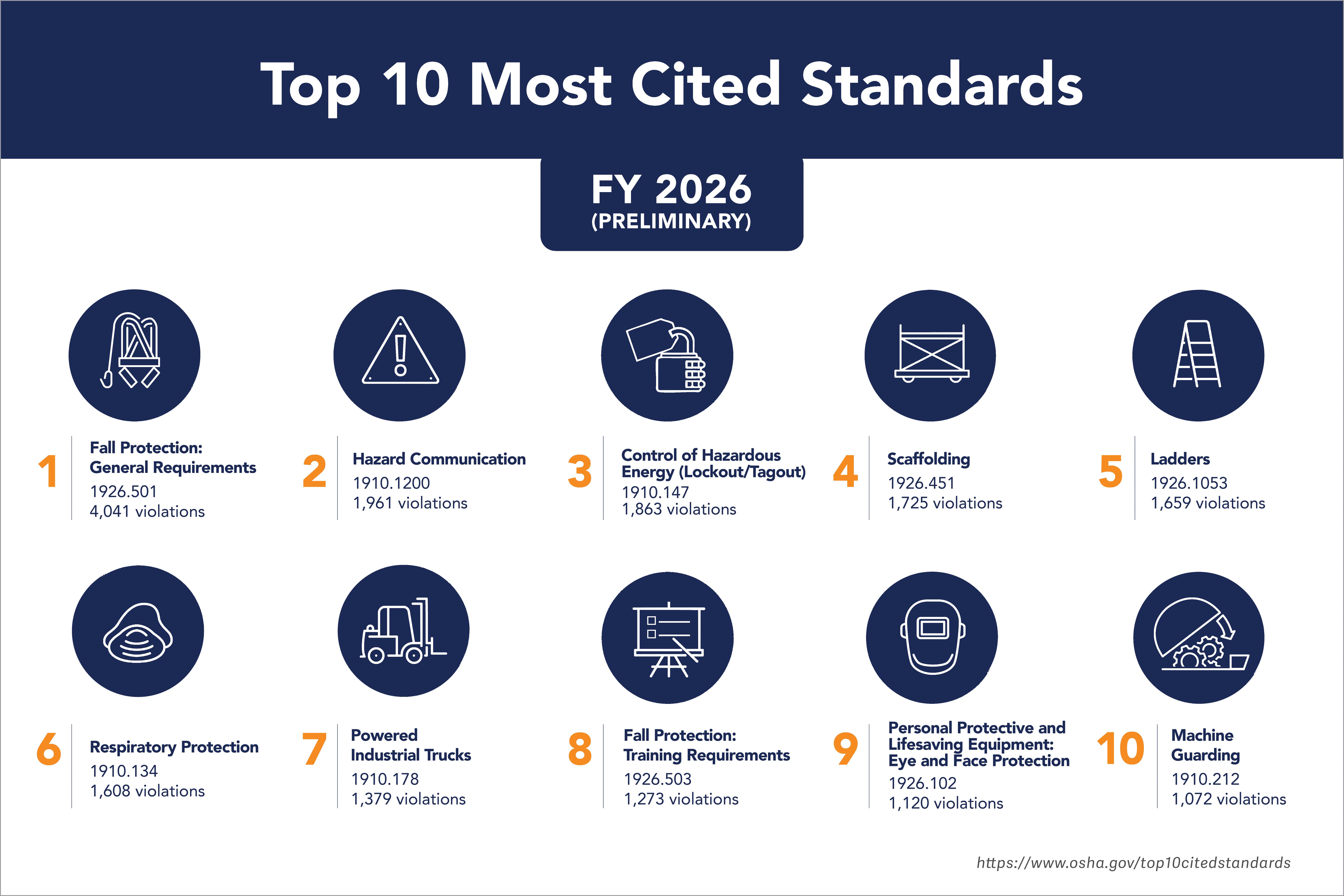
The Occupational Safety and Health Administration’s (OSHA) newly released Top 10 Most Frequently Cited Violations for fiscal year 2026 delivers a familiar message: the most common workplace hazards remain highly preventable, yet they continue to put workers at risk every day. According to Top 10 OSHA Violations of 2026, fall protection remained OSHA’s most cited violation for the 16th consecutive year, while hazards related to falls, hazardous energy, chemical communication, respiratory protection, and equipment safety continued to dominate the list.
For employers, the latest report is more than a compliance ranking. It is a roadmap to where safety programs continue to break down and where proactive intervention can have the greatest impact.
OSHA’s Top 10 Violations for 2026
The most frequently cited standards were:
- Fall Protection (General Requirements)
- Hazard Communication
- Lockout/Tagout (Control of Hazardous Energy)
- Scaffolding
- Ladders
- Respiratory Protection
- Powered Industrial Trucks
- Fall Protection Training Requirements
- Eye and Face Protection
- Machine Guarding
Notably, four of the top 10 violations are directly related to falls, reinforcing the ongoing challenge of preventing one of the leading causes of workplace fatalities.
The Trend: Familiar Risks Continue to Drive Citations
While citation counts declined across all top 10 categories compared to the prior year, the list itself changed very little. Hazard communication, lockout/tagout, respiratory protection, machine guarding, and fall prevention remain perennial challenges for employers.
The consistency of these rankings tells us something important: today’s challenge is not a lack of regulations. It is the gap between having safety programs on paper and ensuring they are effectively implemented in daily operations.
What These Trends Mean for Employers
Every OSHA citation points to a breakdown in hazard recognition, communication, training, supervision, or prevention. Those breakdowns often lead to:
- Worker injuries and illnesses
- Increased workers’ compensation costs
- OSHA recordable incidents
- Productivity disruptions
- Regulatory penalties and enforcement actions
OSHA’s site-specific targeting programs increasingly use injury and illness data to identify high-risk workplaces, making prevention and accurate recordkeeping more important than ever. Employers with elevated injury rates or compliance gaps may face increased inspection scrutiny.
How WorkCare Helps Reduce Risk and Improve Compliance
The most effective way to reduce OSHA violations is to prevent the incidents that lead to them.
At WorkCare, we help employers build prevention-focused programs that address the root causes behind many of OSHA’s most frequently cited violations, including:
- Ergonomic and injury prevention programs that identify risks before injuries occur
- Early symptom reporting and intervention to reduce recordable incidents
- Respirator medical evaluations and fit testing support
- Occupational health and safety consulting
- OSHA recordkeeping assistance and compliance guidance
- Safety training reinforcement and workforce education
- 24/7 injury triage and clinical decision support
Our experience shows that organizations that invest in early intervention, hazard identification, employee training, and strong occupational health programs are better positioned to reduce injuries, maintain compliance, and avoid costly citations. This prevention-first approach is reflected throughout WorkCare’s safety readiness guidance and employer toolkits.
Key Takeaways for 2027 Planning
OSHA’s Top 10 list changes very little from year to year because the same workplace risks continue to produce the same consequences. The good news is that these hazards are largely preventable.
The employers that will improve compliance in 2027 and beyond are those that move beyond rudimentary checklists and, instead, work to build cultures of prevention. By focusing on fall protection, hazard communication, lockout/tagout, respiratory protection, training, and early intervention, organizations can protect their people while reducing regulatory and financial risk.
Want to identify potential compliance gaps before OSHA does and start building a safety culture that works? Contact WorkCare for a comprehensive review of your occupational health, injury prevention, and compliance readiness programs.


Let’s Work Together
Ready to take your workforce health and safety to the next level?
Contact us today to learn how WorkCare can partner with you to create a healthier, safer, and more productive workplace.
