
When Temporary Workplace Fixes Become Permanent Risks
Temporary workplace fixes often outlast their purpose, quietly increasing employee exposure and fatigue. Learn the warning signs and how early intervention prevents lasting occupational health risks.
Many workplace risks don’t start with an obvious hazard. They start with a practical decision made to keep operations moving.
A broken piece of equipment, a staffing shortage, a delayed shipment, or a temporary reassignment can all lead to a workaround that helps maintain productivity. In most cases, these changes are introduced with the expectation that they will be short-lived. Yet temporary measures often remain in place longer than planned and gradually become part of the normal way work gets done.
As those adjustments settle into daily operations, they can change employee exposure, alter physical demands, and reduce opportunities for recovery. From an occupational health standpoint, this matters because many work-related injuries and illnesses develop through repeated exposure over time rather than a single event.
How Temporary Fixes Change Occupational Exposure
Operational workarounds rarely affect only workflow. They also change how employees perform their jobs. Small adjustments can influence force requirements, repetition, body positioning, task duration, and recovery time between periods of exertion.
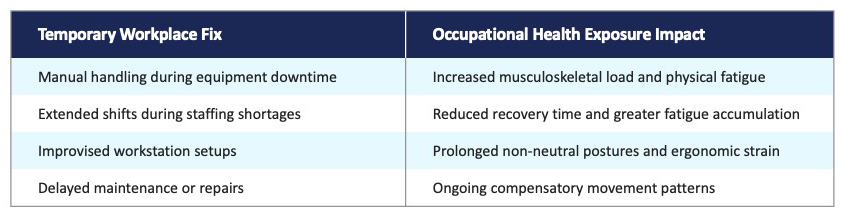
A broken lift assist, for example, may shift a task back to manual handling for an extended period. Staffing gaps can stretch workloads across longer shifts or fewer recovery breaks. A temporary workstation or delayed maintenance issue can gradually push employees into less efficient movement patterns or less favorable postures as they find ways to keep work moving.
These changes do not always create immediate injury risk. The concern is what happens when they continue over time. Cumulative exposure can increase physical strain and place greater demands on the musculoskeletal system than the original process was designed to support.
Exposure Creep and Occupational Health
Occupational health professionals sometimes refer to this gradual increase in demand as exposure creep. The term describes small changes in work conditions that accumulate over time and increase physical stress without a clear triggering event.
Musculoskeletal disorders account for a substantial share of workplace injuries and are commonly associated with repetitive motion, overexertion, and cumulative strain. In many cases, these conditions develop when repeated physical demands exceed the body’s ability to recover.
When temporary workarounds remain in place, employees may experience increased fatigue and reduced recovery between demanding tasks. While the original operational change may appear minor, its effects can accumulate and contribute to the development of work-related musculoskeletal conditions.
When Symptoms Become Part of the Job
An important shift often occurs before an injury is reported. Employees begin to view early symptoms as part of normal work.
Workers under modified conditions may notice soreness that resolves overnight, fatigue that carries into the next shift, reduced range of motion, or discomfort they manage without reporting it. When a workaround is considered temporary, employees may be more likely to adapt their approach rather than escalate concerns. They may adjust pace, modify technique, or accept discomfort as part of completing the task.
As a result, opportunities for early intervention can be missed while exposure continues.
Recovery Time and Cumulative Strain
Temporary fixes can also reduce the time available for physical recovery during the workday.
Fatigue can reduce physical performance, decrease alertness, and increase susceptibility to injury over time. From an occupational health perspective, this reflects an imbalance between physical demand and recovery capacity.
Even when individual tasks appear manageable, limited recovery time across shifts can allow cumulative strain to build. Research cited by the Occupational Safety and Health Administration found that working 12-hour shifts increases injury risk by 37%. For employees absorbing extended hours or compressed schedules as part of a ‘temporary’ fix, this data underscores how quickly reduced recovery time can translate into measurable safety consequences.
When a Temporary Fix Becomes the New Process
Organizations often need temporary solutions to keep work moving during disruptions. The greater challenge is recognizing when a short-term adjustment has quietly become part of the standard operating process.
The examples below show how common operational fixes can influence employee exposure over time.
Signs a Temporary Fix May Be Affecting Employee Health
Periodic review is important when a workaround remains in place longer than expected. Indicators that a temporary adjustment may be affecting occupational health include:
- The workaround is no longer described as temporary
- New employees are trained using the modified process
- Workers report increasing fatigue, soreness, or discomfort related to the task
- The original process is no longer clearly documented or followed
- The workaround has remained in place beyond the disruption that prompted it
These conditions may indicate that an operational response has become a sustained exposure condition with potential health implications.
Reassessing Temporary Workplace Solutions
Temporary workplace fixes are often necessary to maintain operations during disruption. They help organizations maintain productivity and keep essential work moving forward. At the same time, these adjustments should be reviewed periodically to confirm they continue to serve their original purpose.
When a temporary solution becomes routine, employee exposure can change in ways that are easy to overlook. Regular reassessment helps ensure that an operational decision does not become an unintended occupational health risk.
The Occupational Health Perspective
Early recognition of changing workplace exposure is an important part of reducing risk. Many musculoskeletal conditions and fatigue-related concerns develop gradually and may progress before they become recordable injuries or formally diagnosed cases.
WorkCare helps employers identify changes in workplace exposure, support early symptom reporting, and guide timely intervention strategies. By recognizing when operational adjustments begin to affect employee health, organizations can address concerns earlier and help prevent progression into more serious conditions.
Connect with WorkCare to learn how early intervention strategies can help reduce risk and support employee health before issues escalate.


Let’s Work Together
Ready to take your workforce health and safety to the next level?
Contact us today to learn how WorkCare can partner with you to create a healthier, safer, and more productive workplace.
