
What Causes Occupational Injury Case Management to Drive Up Workers’ Compensation Costs?
Occupational injury case management can influence workers' compensation costs through clinical decisions, communication, and care coordination. Learn what drives claim complexity and how employers can support better outcomes.
A workplace injury does not always become a costly workers’ compensation claim because of the injury itself. The decisions made throughout the recovery process can influence claim complexity, duration, and overall cost.
Occupational injury case management helps coordinate care, support injured employees, and guide claims through recovery. However, when case management processes lack clinical alignment, consistent communication, or a clear focus on functional recovery, claims may experience additional complexity, delays, or barriers that can affect overall claim costs.
For employers, understanding where injury management processes may create unnecessary complexity can help identify opportunities to improve claim outcomes.
According to the Occupational Safety and Health Administration (OSHA), workplace injuries and illnesses create both direct costs, such as medical expenses and workers’ compensation payments, and indirect costs, including productivity losses, workforce replacement, and administrative burden.
Understanding the factors that influence claim complexity can help organizations develop more effective workers’ compensation claim management strategies.
Why Do Workers’ Compensation Claims Become More Expensive Over Time?
Workers’ compensation costs are influenced by more than the initial injury diagnosis. As a claim progresses, additional factors such as duration of recover or resources needed can affect the amount of medical care required. A claim that lacks clear direction may require additional administrative involvement and coordination over time.
Common contributors to increasing claim complexity include:
- Delayed clinical decision-making
- Treatment pathways that are not aligned with occupational requirements
- Multiple provider transitions
- Limited coordination among healthcare professionals and claims stakeholders
- Delays related to independent medical examinations (IMEs)
- Recovery barriers that are not identified early
- Disputes that develop when expectations and communication are unclear
Research from the Workers Compensation Research Institute (WCRI) examines how variations in medical care delivery, treatment patterns, and workers’ compensation system processes influence claim outcomes.
The goal of effective occupational injury management is not simply closing claims faster. It is helping ensure claims progress appropriately through informed medical decisions, coordinated care, and attention to recovery barriers.
Another factor affecting workers’ compensation costs is the complexity created when no single party has a complete view of the employee’s recovery process. Employers may understand job requirements, treating providers may understand medical care, and claims professionals may understand administrative requirements, but these perspectives must be connected to support effective injury management. When information remains fragmented, decisions may take longer and recovery plans may become more difficult to coordinate.
Why Do Similar Workplace Injuries Have Different Claim Costs?
Two employees can experience similar workplace injuries and have very different workers’ compensation outcomes.
Consider this hypothetical example involving two employees who experience similar workplace back injuries.
The first employee receives an occupational health evaluation shortly after the injury. The provider reviews the employee’s job demands, establishes appropriate restrictions, coordinates treatment recommendations, and communicates recovery expectations.
The second employee receives care from multiple providers without occupational context. Treatment recommendations vary, work restrictions are unclear, and additional referrals occur before the recovery plan is reassessed.
The injuries may appear similar, but the claims may follow different paths. The second claim may involve additional appointments, more administrative coordination, and increased uncertainty surrounding recovery planning. The difference is not necessarily the injury itself. The difference is how effectively the injury is managed.
What Case Management Practices Can Increase Workers’ Compensation Costs?
Case management plays an important role in workers’ compensation. When structured effectively, it helps coordinate information, support communication, and identify barriers to recovery.
However, certain case management challenges can contribute to claim complexity.
Inconsistent Case Management Assignment
Consistency is an important part of managing complex workers’ compensation claims. When responsibility for a claim changes hands frequently, maintaining continuity of information, treatment progress, and recovery goals can become more challenging.
Frequent transitions may create additional challenges, including:
- Repeated review of existing claim information
- Delayed communication between stakeholders
- Difficulty maintaining consistent recovery goals
- Additional administrative coordination
A consistent approach to injury management helps maintain visibility into claim progress and supports informed decision-making.
Case Management Focused on Administrative Milestones
Workers’ compensation programs may use different measures to evaluate case management effectiveness. Programs focused only on administrative milestones, without considering recovery progress and claim outcomes, may overlook opportunities to address barriers that affect recovery. Successful injury management requires balancing efficient claim administration with appropriate medical care, employee support, and recovery planning.
The goal is not simply to move a claim toward closure, but to support an appropriate recovery process that considers the employee’s health needs and workplace requirements.
Limited Collaboration Between Clinical and Claims Teams
Occupational injury case management is most effective when treating providers, employers, claims professionals, and clinical resources work from the same understanding of an employee’s recovery plan. When communication between these stakeholders is inconsistent or delayed, important clinical and workplace information may not be considered when decisions are made.
For example, a treating provider may not fully understand the physical demands of the employee’s job, while the employer or claims team may not have timely visibility into updated work restrictions or recovery progress. These communication gaps can create additional administrative coordination, delay return-to-work planning, or result in treatment decisions that do not fully reflect the employee’s functional job requirements.
A coordinated injury management approach helps ensure clinical recommendations, workplace expectations, and claims decisions remain aligned throughout recovery. The American College of Occupational and Environmental Medicine (ACOEM) publishes evidence-based clinical practice guidelines that support occupational medicine decision-making and appropriate treatment approaches.
How a Reactive Case Management Approach Can Increase Claim Complexity
Workers’ compensation case management can become more challenging when teams are primarily responding to problems after they occur rather than identifying potential barriers early in the recovery process.
A reactive approach may result in missed opportunities to address issues such as unclear treatment plans, changing work restrictions, delayed communication, or questions about whether a current care pathway remains appropriate. As a claim progresses, unresolved questions can create additional coordination needs among employees, employers, providers, and claims professionals.
Effective occupational injury management requires ongoing evaluation of whether the recovery process is moving in the right direction. This includes understanding:
- Whether the employee is receiving appropriate care for the injury
- Whether treatment recommendations support functional improvement
- Whether work restrictions reflect the employee’s current capabilities
- Whether additional barriers are affecting recovery progress
Without this ongoing clinical perspective, claims teams may have limited visibility into why a claim is not progressing or what interventions may help move recovery forward.
A proactive injury management model helps shift the focus from managing problems after they occur to identifying opportunities for earlier intervention, appropriate care coordination, and more informed decision-making.
How Treatment Decisions Can Increase Claim Complexity
Treatment decisions are an important part of every workers’ compensation claim, but care recommendations may be more effective when they consider both the employee’s medical needs and the functional requirements of the job.
When treatment plans are developed without consideration of occupational demands, employers and claims teams may have less clarity around work restrictions, recovery expectations, and next steps.
Occupational medicine brings together clinical expertise and workplace knowledge to help align medical care with functional recovery goals.
Factors that may increase claim complexity include:
- Treatment plans that are not connected to job requirements
- Unclear expectations for recovery progression
- Additional referrals without reassessing the overall care plan
- Limited visibility into whether treatment is supporting functional improvement
A clinically guided approach helps organizations better understand whether care decisions are supporting appropriate recovery.
Why Do Some Workers’ Compensation Claims Stay Open for Months?
Some workers’ compensation claims require extended recovery periods because of injury severity or medical complexity. However, claims may also remain open longer when recovery lacks clear direction or when barriers are not identified early.
Factors that may contribute to prolonged claims include:
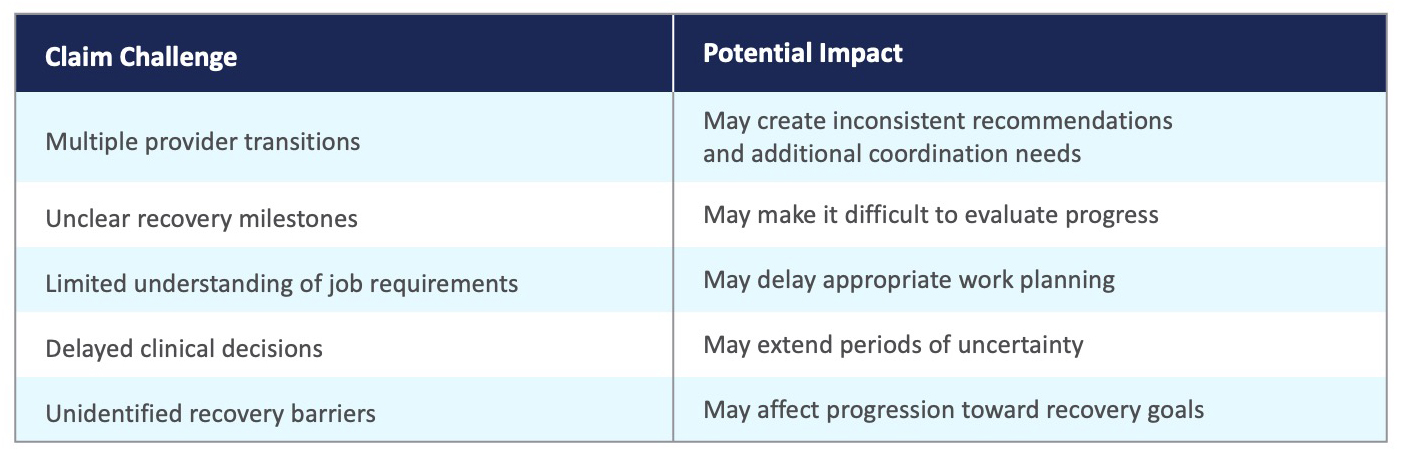
A structured occupational injury management process helps stakeholders understand whether recovery is progressing appropriately and where additional support may be needed.
How Delayed Decisions Increase Injury Case Management Costs
Workers’ compensation claims can become more difficult to manage when important decisions are delayed. Delays can be cause by delayed access to appropriate clinical evalution, delays in schedule necessary consultations, extended time before treatment, and delays in completing independent medical examinations.
An IME may provide valuable information when questions exist regarding diagnosis, treatment, or work capacity. However, delays in scheduling or completing evaluations may extend periods of uncertainty and make it more difficult for stakeholders to make timely decisions.
Maintaining a coordinated approach helps employers and claims professionals identify next steps and support appropriate claim progression.
How Communication Challenges Can Affect Workers’ Compensation Claims
Workers’ compensation claims involve multiple stakeholders with different responsibilities. When expectations, treatment plans, or recovery goals are unclear, uncertainty may increase for everyone involved.
Poor communication can create frustration or uncertainty for injured employees and other stakeholders. In some situations, disputes may develop that add complexity to the claim process.
Clear communication helps ensure employees understand their recovery process while allowing employers, healthcare providers, and claims teams to remain aligned.
How Psychosocial and Health Factors Influence Claim Management
Recovery from a workplace injury can be influenced by multiple factors, including the nature of the injury, workplace requirements, psychosocial considerations, and other health factors.
Examples of factors that may affect recovery include:
- Concerns about returning to work
- Difficulty understanding recovery expectations
- Pre-existing health factors
- Challenges outside of work that may affect recovery
Identifying potential barriers early allows care teams to consider the full recovery picture and provide appropriate support.
Occupational health professionals consider both medical and workplace factors when helping guide injury management decisions.
What Does Effective Occupational Injury Case Management Look Like?
Effective occupational injury management focuses on clinical alignment, communication, and recovery support.
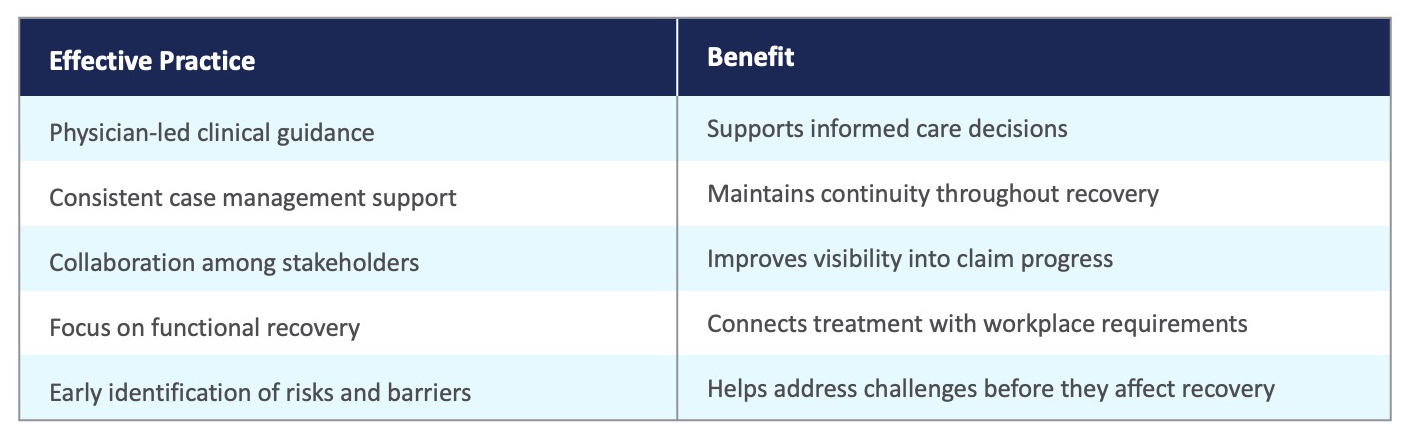
A successful injury management approach considers both employee recovery and organizational needs.
How WorkCare Helps Support Occupational Injury Management
WorkCare helps employers, insurers, brokers, third-party administrators (TPAs), and other workers’ compensation partners manage workplace injuries through physician-led occupational health services, injury triage, clinical guidance, and coordinated injury management.
WorkCare’s occupational injury management approach helps organizations identify appropriate care pathways, support communication among stakeholders, and navigate the complexities of workplace injury recovery.
By combining occupational medicine expertise with injury management support, WorkCare helps organizations create a more consistent approach to workers’ compensation claim management.
Connect with WorkCare to learn more.


Let’s Work Together
Ready to take your workforce health and safety to the next level?
Contact us today to learn how WorkCare can partner with you to create a healthier, safer, and more productive workplace.
