
Workplace Flu Prevention Campaigns Reduce Absences and Productivity Disruptions
Workplace flu prevention campaigns that feature vaccination as a first line of defense along with personal hygiene best practices help reduce illness exposure risk and productivity loss.
The 2026-27 influenza season started early with a higher-than-average number of confirmed cases, along with increases in outpatient and emergency department visits and hospitalizations for flu symptoms in some parts of the country, according to the Centers for Disease Control and Prevention (CDC).
Influenza is a contagious respiratory illness. The flu begins to spread more rapidly in the winter when people spend more time indoors and tapers off by April or May in North America.
Workplace prevention campaigns that feature vaccination against the flu as a first line of defense help reduce illness exposure risk and productivity loss. The more employees who get vaccinated, the greater the level of protection afforded to everyone, regardless of their vaccination status. This is called herd or group immunity.
The CDC recommends vaccination for everyone over age 6 months, with exceptions for certain medical or personal reasons. Vaccination combined with consistent personal hygiene practices are particularly critical to protect of workers with high exposure risk, such as schoolteachers, healthcare professionals, first responders, and personnel in group homes and prisons. Vulnerable community members include infants, frail older adults, and nyone with an underlying condition that increases their risk for pneumonia and other potentially fatal flu-related illnesses.
The Burdens of Disease
Seasonal influenza is annually associated with 17-20 million lost workdays and billions of dollars in lost productivity and economic costs. For example:
- A systematic review of studies on flu-related productivity impacts found that up to 75% of healthy employees missed some work due to laboratory-confirmed influenza, non-confirmed flu-like symptoms, or to take care of an ill household member. A significant number of ill employees returned to work before they were no longer contagious.
- For a company with 10,000 employees, seasonal influenza vaccination of workers and their dependents was estimated to prevent 325 infections, 1,044 sick days, one hospitalization, and 0.03 deaths. In this scenario, the employer saved $30,964 in medical costs and $292,083 in averted lost productivity; employees avoided an estimated $17,202 in medical costs, according to research published in the Journal of Market Access and Health Policy.
- A study of U.S. adults with lab-confirmed flu published in Infectious Diseases and Therapy found that 58% of 593 ill employees missed a day of work; 35% percent were absent for seven days. The same workforce population experienced increased rates of presenteeism and overall work impairment due to symptoms that can affect concentration and increase injury and legal liability risks.
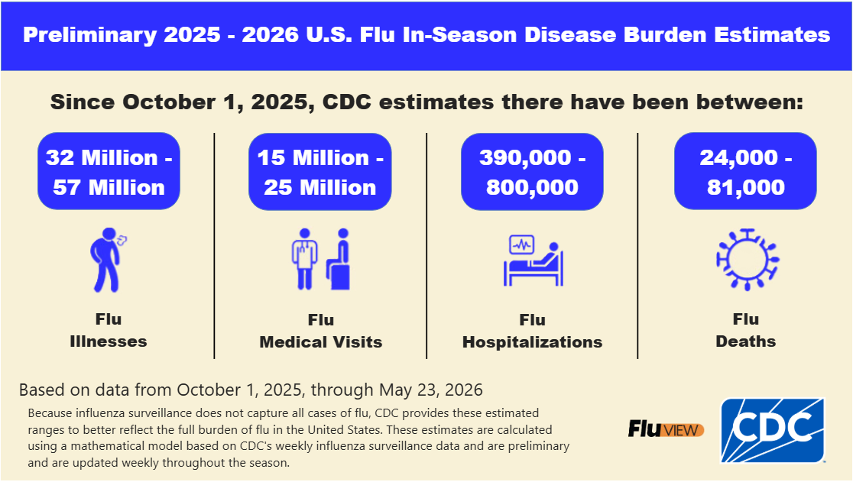
The CDC’s disease burden estimates for the 2025-26 flu season featured in this chart provide indicators for occupational health and safety impacts in U.S. workplace for the 2026-27 season:
How Vaccination Works
Flu vaccine causes protective antibodies to develop in the body within about two weeks of vaccination. This process may temporarily induce flu-like symptoms, but it does not cause the flu. There is still a chance of getting the flu after vaccination because effectiveness depends on the viruses that predominate during a given year. Vaccination has been shown to help reduce illness severity.
Most people get a flu shot at a local clinic, drug store, physician’s office, or on-site at work. All of the vaccine formulas approved for use in the U.S. for the 2026-27 season are trivalent, providing protection against three viral strains: H1N1, H3N2, and B/Victoria lineage virus. About 75% of the U.S. flu vaccine supply is egg-based, with flu viruses grown inside fertilized eggs. The remainder are either cell-based (viruses grown in mammal cells) or recombinant (using genetic engineering to produce influenza protein).
In a recent development, the FDA approved the release the first mRNA flu vaccine (mFlusiva® produced by Moderna) for adults over 50. There are also three specially formulated vaccines for adults older than 65. A nasal spray (Flumist®) containing live attenuated vaccine is available as a non-needle alternative for healthy children over 2 years old and adults up to age 49.
According to public health officials, 99% of U.S.-approved flu vaccines do not contain thimerosal, a compound containing ethylmercury (not to be confused by methylmercury) that has been safely used for decades in multi-dose vaccines to help kill bacteria. While there is no evidence of harm to physical or mental health associated with low doses of thimerosal in vaccine for children or adults, its use has been gradually reduced or eliminated in certain vaccines as a precautionary measure since 1999.
Symptoms and Treatment
Most people who get the flu have mild-to-moderate illness and recover on their own within five days to two weeks. Symptoms may include fever and chills, cough, shortness of breath, runny nose or congestion, achiness, headache, and fatigue. Vomiting and diarrhea are more common among children. Some people may develop sinus or ear infections.
Flu remedies include rest, staying well-hydrated, and eating nourishing foods. Over-the-counter medications are available to help relieve symptoms. Antiviral drugs may be prescribed in certain cases to treat symptoms and shorten illness duration. Studies show that antiviral drugs are more effective when they are started within two days of getting sick, although starting them later can still be helpful.
Contagious Disease Prevention Reminders
Along with vaccination, contagious disease prevention measures employers can recommend to employees include:
- Frequent hand washing with soap and warm water
- Using hand sanitizer when water is not available
- Covering coughs and sneezes and throwing tissues away
- Disinfecting shared objects and communal areas
- Not touching the nose, mouth, and eyes
- Staying home when ill and avoiding others who are sick
- Wearing a mask, especially when in public places
Legal Considerations
Employers have the right to establish health and safety rules that are job-related and consistent with business necessity. This includes requiring immunizations that protect against the spread of infectious illnesses. Employers who require vaccinations are expected to engage in an interactive process to comply with the Americans with Disabilities Act (ADA), including exemptions for medical necessity or religious beliefs.
State laws require healthcare facilities to ensure consenting employees receive influenza vaccines. In some workplaces, infectious disease management includes mandatory use of personal protective equipment such as gloves, gown, mask, eye protection, face shield and safe injection practices. Surgical masks or respirators may be used to help reduce the spread of disease via airborne or droplet contamination.
How We Help Employers Prevent Spread of Flu
At WorkCare, we help employers plan and roll out flu prevention campaigns. We support on-site flu shot clinics and assist with referrals to qualified local providers. Our occupational health physicians provide guidance on contagious disease management and return-to-work recommendations after illness.
Additional Resources
Flu Vaccination Program Overview
Contact us to learn more.


Let’s Work Together
Ready to take your workforce health and safety to the next level?
Contact us today to learn how WorkCare can partner with you to create a healthier, safer, and more productive workplace.
